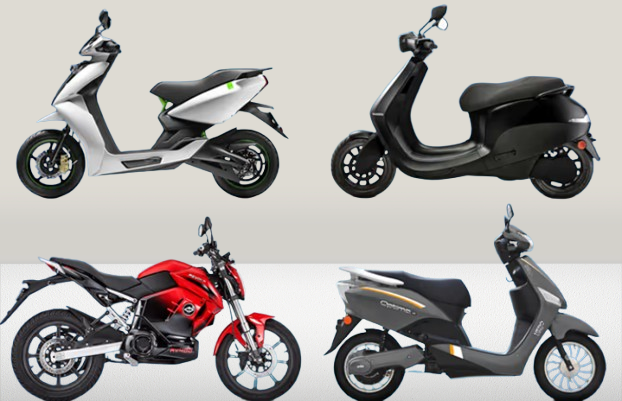
₹45,000 saved every year. Just by switching your daily commute scooter. That’s not a marketing promise — that’s the average real-world difference between riding an electric scooter versus a petrol scooter in India in 2026. And the gap is only widening. Electric Scooter vs Petrol Scooter Cost Comparison India (2026) — Ola, Ather, TVS vs Honda, Hero
India’s two-wheeler market is the largest in the world, with over 17 million scooters sold annually. The shift to electric has begun in cities like Bengaluru, Delhi, and Pune — not because of environmental guilt, but because the math is irresistible.
This article compares the most popular electric scooters in India — Ola S1 Pro, Ather 450X, TVS iQube, Bajaj Chetak, and Simple One — against their petrol equivalents: Honda Activa, TVS Jupiter, Hero Splendor, and Bajaj Pulsar. We’ll show you exact monthly costs, break-even calculations, and who should make the switch in 2026.
calculate your exact savings? Use the EV vs Petrol Scooter Calculator at EVCommunity.in
1. Why Two-Wheelers Are Leading India’s EV Revolution {#why-two-wheelers}
Electric two-wheelers now account for over 6% of total two-wheeler sales in India — up from less than 1% in 2020. Compare that to electric cars at just 2% of passenger vehicle sales. Why the difference?
Three reasons:
- Smaller price premium — Electric scooters cost ₹50,000–₹80,000 more than petrol equivalents, not ₹3–6 lakh like cars. That’s a psychologically easier gap to justify.
- Perfect daily range — Most Indian scooter users ride 30–50 km per day. Electric scooters deliver 80–150 km real-world range, eliminating range anxiety completely for urban commuters.
- Fast break-even — With the narrower price gap and identical fuel savings percentages (80–85% cheaper than petrol), electric scooters break even in 2.5–3.5 years versus 4–6 years for electric cars.
Result? In cities like Bengaluru, Pune, and Delhi, you now see more Ola S1s and Ather 450Xs on the road than Hero Splendors in some neighborhoods. The tipping point is here.
calculate your exact savings? Use the EV vs Petrol Scooter Calculator at EVCommunity.in
2. Electric vs Petrol Scooter: Cost Per Km Formula {#formula}
Before we dive into model-specific numbers, let’s break down the basic math.
Petrol Scooter Cost Per Km
Cost per km = Petrol Price (₹/litre) ÷ Mileage (km/litre)
Example: Honda Activa 6G
- Petrol price: ₹105/litre
- Real-world mileage: 45 km/l
- Cost per km = ₹105 ÷ 45 = ₹2.33 per km
For scooters with lower efficiency (40 km/l):
- ₹105 ÷ 40 = ₹2.63 per km
Electric Scooter Cost Per Km
Cost per km = Electricity Rate (₹/kWh) ÷ Efficiency (km/kWh)
Example: Ola S1 Pro (home charging)
- Electricity rate: ₹8/kWh
- Real-world efficiency: 5.8 km/kWh
- Cost per km = ₹8 ÷ 5.8 = ₹1.38 per km
The saving:
₹2.33 (petrol) − ₹1.38 (electric) = ₹0.95 per km saved
Over 1,200 km/month (typical Indian scooter usage):
₹0.95 × 1,200 = ₹1,140 saved per month
₹1,140 × 12 = ₹13,680 saved per year — just on fuel
Now let’s see how this plays out across actual models.
3. Head-to-Head Model Electric Scooter vs Petrol Scooter Cost Comparison {#model-comparisons}
🔋 Ola S1 Pro vs Honda Activa 6G
| Specification | Ola S1 Pro | Honda Activa 6G |
|---|---|---|
| Price (ex-showroom) | ₹1,29,999 | ₹78,464 |
| Real-World Range | 135 km | 300 km (tank) |
| Top Speed | 116 km/h | 83 km/h |
| 0-40 km/h | 3.0 sec | 5.8 sec |
| Efficiency | 5.8 km/kWh | 45 km/l |
| Fuel Cost @ 105/L, Elec @ ₹8/kWh | ₹1.38/km | ₹2.33/km |
| Monthly Fuel (1,200 km) | ₹1,656 | ₹2,796 |
| Monthly Saving | — | ₹1,140 |
| Annual Fuel Saving | — | ₹13,680 |
| Maintenance (annual) | ₹1,500–₹2,500 | ₹3,500–₹5,000 |
Key Insight: The Ola S1 Pro costs ₹51,535 more after FAME-II subsidy (₹10,000). At ₹1,140/month fuel savings + ₹200/month maintenance savings, the break-even is 38 months (3.2 years).
Who wins? Long-range version with 181 km real-world range, futuristic touchscreen, and sub-3-second acceleration make this a compelling upgrade for anyone doing 30+ km daily.
🔋 Ather 450X vs TVS Jupiter 125
| Specification | Ather 450X | TVS Jupiter 125 |
|---|---|---|
| Price (ex-showroom) | ₹1,48,001 | ₹82,460 |
| Real-World Range | 105 km | 350 km (tank) |
| Top Speed | 90 km/h | 86 km/h |
| 0-40 km/h | 3.3 sec | 5.5 sec |
| Efficiency | 5.5 km/kWh | 50 km/l |
| Cost Per Km | ₹1.45/km | ₹2.10/km |
| Monthly Fuel (1,200 km) | ₹1,740 | ₹2,520 |
| Monthly Saving | — | ₹780 |
| Annual Fuel Saving | — | ₹9,360 |
| Maintenance (annual) | ₹2,000–₹3,000 | ₹4,000–₹5,500 |
Key Insight: Ather 450X is the premium electric scooter — superior build quality, best-in-class dashboard, and a charging network across 100+ Indian cities. Price premium after FAME-II: ₹55,541. Break-even: ~50 months (4.2 years).
Who wins? If you value ride quality, software updates, and can absorb the higher upfront cost, the Ather is India’s best electric scooter. For pure economics, Ola S1 or TVS iQube offer faster payback.
🔋 TVS iQube vs Hero Splendor+
| Specification | TVS iQube | Hero Splendor+ |
|---|---|---|
| Price (ex-showroom) | ₹1,24,990 | ₹74,850 |
| Real-World Range | 100 km | 350 km (tank) |
| Top Speed | 78 km/h | 85 km/h |
| Efficiency | 6.0 km/kWh | 60 km/l |
| Cost Per Km | ₹1.33/km | ₹1.75/km |
| Monthly Fuel (1,200 km) | ₹1,596 | ₹2,100 |
| Monthly Saving | — | ₹504 |
| Annual Fuel Saving | — | ₹6,048 |
| Maintenance (annual) | ₹1,800–₹2,500 | ₹3,200–₹4,500 |
Key Insight: TVS iQube is the most affordable established-brand electric scooter in India. After FAME-II, the price premium is just ₹40,140. Break-even: ~48 months (4 years).
Who wins? The iQube is ideal for families making a cautious first move to electric. Strong TVS service network (1,000+ centres) reduces ownership anxiety compared to newer EV-only brands.
🔋 Bajaj Chetak vs Bajaj Pulsar 125
| Specification | Bajaj Chetak | Bajaj Pulsar 125 |
|---|---|---|
| Price (ex-showroom) | ₹1,27,303 | ₹82,176 |
| Real-World Range | 95 km | 380 km (tank) |
| Top Speed | 73 km/h | 91 km/h |
| Efficiency | 5.9 km/kWh | 50 km/l |
| Cost Per Km | ₹1.36/km | ₹2.10/km |
| Monthly Fuel (1,200 km) | ₹1,632 | ₹2,520 |
| Monthly Saving | — | ₹888 |
| Annual Fuel Saving | — | ₹10,656 |
| Maintenance (annual) | ₹2,000–₹2,800 | ₹3,500–₹5,000 |
Key Insight: The Chetak brings legacy brand trust to the electric space. After FAME-II, premium is ₹35,127. Break-even: ~34 months (2.8 years) — one of the fastest paybacks in the category.
Who wins? The Chetak targets conservative buyers who trust the Bajaj name. Solid metal build, good service network, and respectable range make it a safe choice.
🔋 Simple One vs Honda Dio
| Specification | Simple One | Honda Dio |
|---|---|---|
| Price (ex-showroom) | ₹1,44,999 | ₹76,500 |
| Real-World Range | 150 km | 320 km (tank) |
| Top Speed | 105 km/h | 83 km/h |
| Efficiency | 6.1 km/kWh | 50 km/l |
| Cost Per Km | ₹1.31/km | ₹2.10/km |
| Monthly Fuel (1,200 km) | ₹1,572 | ₹2,520 |
| Monthly Saving | — | ₹948 |
| Annual Fuel Saving | — | ₹11,376 |
| Maintenance (annual) | ₹2,000–₹2,800 | ₹3,800–₹5,200 |
Key Insight: Simple One offers the longest range in the ₹1–1.5 lakh segment (203 km claimed, 150 km real-world). After FAME-II: ₹58,499 premium. Break-even: ~46 months (3.8 years).
Who wins? If your commute is 50+ km/day or you want zero range anxiety, Simple One delivers. However, service network is still expanding — check local availability before buying.
4. Electric Scooter vs Petrol Scooter Cost Comparison Table (1,200 km/month) {#monthly-comparison}
| Model | Type | Monthly Fuel/Elec | Maintenance (prorated) | Total Monthly Cost | Saving vs Petrol |
|---|---|---|---|---|---|
| Honda Activa 6G | Petrol | ₹2,796 | ₹370 | ₹3,166 | — |
| Ola S1 Pro | Electric | ₹1,656 | ₹165 | ₹1,821 | ₹1,345 |
| TVS Jupiter 125 | Petrol | ₹2,520 | ₹380 | ₹2,900 | — |
| Ather 450X | Electric | ₹1,740 | ₹210 | ₹1,950 | ₹950 |
| Hero Splendor+ | Petrol | ₹2,100 | ₹310 | ₹2,410 | — |
| TVS iQube | Electric | ₹1,596 | ₹175 | ₹1,771 | ₹639 |
| Bajaj Pulsar 125 | Petrol | ₹2,520 | ₹370 | ₹2,890 | — |
| Bajaj Chetak | Electric | ₹1,632 | ₹200 | ₹1,832 | ₹1,058 |
| Honda Dio | Petrol | ₹2,520 | ₹380 | ₹2,900 | — |
| Simple One | Electric | ₹1,572 | ₹200 | ₹1,772 | ₹1,128 |
Key Takeaway: Across all model pairs, electric scooters save ₹640 to ₹1,345 per month — that’s ₹7,680 to ₹16,140 per year for the average 1,200 km/month rider.
5. Charging at Home vs Petrol Station: The Convenience Factor {#charging-convenience}
This is the question every potential electric scooter buyer asks: “But isn’t charging a hassle compared to filling petrol?”
Let’s break down both experiences honestly.
Petrol Scooter Fueling
Time Investment:
- Drive to petrol pump: 5–10 minutes (depending on proximity)
- Queue wait: 2–10 minutes (peak hours longer)
- Actual fueling: 2 minutes
- Payment + return: 2–3 minutes
- Total time: 11–25 minutes per visit
Frequency: Every 250–300 km = 3–4 visits per month for 1,200 km riding
Monthly time investment: ~50–80 minutes at petrol pumps
Cost variability: Petrol prices fluctuate ₹2–5/litre every few weeks
Electric Scooter Charging
Home Charging (80% of users):
- Plug into standard 15A socket before sleeping
- 0–80% charge in 4–5 hours
- Wake up to full range
- Active time investment: 30 seconds
Monthly time investment: ~3 minutes (just plugging/unplugging)
Cost: Fixed at your home electricity rate (no price volatility)
Public Charging (occasional top-ups):
- Ather Grid, Ola Hypercharger, or third-party DC fast chargers
- 0–80% in 45–60 minutes
- Available in metro areas, tier-1 cities
- Cost: ₹18–22/kWh (still cheaper than petrol at ₹3.00–₹3.67/km)
The Verdict: Convenience Comparison
| Factor | Petrol | Electric (Home Charging) | Winner |
|---|---|---|---|
| Time per month | 50–80 mins | 3 mins | ✅ Electric |
| Convenience | Must visit pump | Charge overnight | ✅ Electric |
| Cost predictability | Variable | Fixed | ✅ Electric |
| Long trips (200+ km) | Easy | Requires planning | ✅ Petrol |
| Service station density | Everywhere | Growing (urban strong) | ✅ Petrol |
The honest truth: If you have a parking spot with a socket, home charging is dramatically more convenient than visiting petrol pumps. If you’re 100% dependent on public charging, it’s slightly less convenient than petrol but still workable in cities.
6. Maintenance: Why Electric Scooters Save You ₹8,000–₹12,000/Year {#maintenance}
Electric scooters don’t just save on fuel. They save massively on maintenance — and these savings are often undercounted.
Annual Maintenance Breakdown
| Service Item | Petrol Scooter | Electric Scooter |
|---|---|---|
| Engine oil change | ₹800–₹1,200 (2× per year) | ❌ Not required |
| Oil filter | ₹300–₹500 | ❌ Not required |
| Air filter | ₹250–₹400 | ❌ Not required |
| Spark plug | ₹300–₹600 | ❌ Not required |
| Clutch maintenance | ₹500–₹1,000 | ❌ Not required |
| Carburetor cleaning | ₹400–₹800 (if needed) | ❌ Not required |
| Exhaust system | ₹200–₹500 | ❌ Not required |
| Chain lubrication | ₹300–₹500 | ❌ Not required (belt drive) |
| Brake pad replacement | ₹1,200–₹2,000 | ₹1,200–₹2,000 (lasts 2× longer due to regen) |
| Tyre replacement | ₹2,000–₹3,500 | ₹2,000–₹3,500 |
| General service (labour) | ₹800–₹1,500 | ₹500–₹1,000 |
| TOTAL ANNUAL COST | ₹4,500–₹7,500 | ₹1,500–₹3,000 |
Annual Maintenance Saving: ₹3,000 to ₹5,500
5-Year Maintenance Saving: ₹15,000 to ₹27,500
Add this to the fuel savings and you can see why electric scooters pay back so much faster than their upfront price suggests.
7. FAME-II Subsidy for Two-Wheelers + State Bonuses {#subsidies}
India’s FAME-II (Faster Adoption and Manufacturing of Electric Vehicles) Phase 2 directly reduces the cost of electric two-wheelers at the point of purchase. This is not a tax rebate you claim later — the subsidy is deducted from the sticker price at the dealer.
Central Government: FAME-II Benefits (2025–26)
| Battery Capacity | Subsidy Rate | Maximum Subsidy |
|---|---|---|
| Electric two-wheelers | ₹10,000 per kWh | ₹10,000 (capped) |
| Electric three-wheelers | ₹10,000 per kWh | ₹50,000 |
Example: Ola S1 Pro has a 3.97 kWh battery. Eligible subsidy = 3.97 × ₹10,000 = ₹39,700, but capped at ₹10,000.
Why the cap? To prevent subsidy concentration on high-capacity (expensive) models and encourage adoption across price segments.
State-Level Additional Incentives
| State | Electric Two-Wheeler Subsidy | Other Benefits | Stacking Allowed? |
|---|---|---|---|
| Delhi | ₹5,000 + ₹2,000/kWh (max ₹7,000) | Scrapping incentive ₹5,000 | Yes (FAME + Delhi) |
| Maharashtra | ₹25,000 (first 1 lakh units) | 100% road tax waiver | Yes |
| Gujarat | ₹20,000 | Subsidised home charger (₹6,000) | Yes |
| Tamil Nadu | ₹15,000 | 100% road tax exemption | Yes |
| Rajasthan | ₹10,000 | Motor vehicle tax waiver | Yes |
| Uttar Pradesh | ₹5,000 | Registration fee exemption | Yes |
| Karnataka | ₹10,000 | Road tax exemption for 3 years | Yes |
| Telangana | ₹10,000 | Road tax exemption | Yes |
| West Bengal | ₹10,000 | Road tax waiver | Yes |
| Kerala | ₹10,000 | Road tax exemption | Yes |
Combined Subsidy Example: Delhi Buyer, Ola S1 Pro
| Item | Amount |
|---|---|
| Ex-showroom price | ₹1,29,999 |
| FAME-II subsidy | −₹10,000 |
| Delhi state subsidy | −₹7,000 |
| Road tax (waived) | −₹6,500 (saved) |
| Registration (waived) | −₹1,500 (saved) |
| Scrapping incentive (old scooter) | −₹5,000 |
| Net Effective Price | ₹99,999 |
| Honda Activa 6G price | ₹78,464 |
| Real premium after all subsidies | ₹21,535 |
With monthly savings of ₹1,345, this Delhi buyer breaks even in just 16 months — the fastest payback in India.
Important: Check with your dealer at the time of purchase. Subsidies are subject to government budget allocations and may have waiting periods or model restrictions.
8. Five-Year Total Cost: Electric vs Petrol Scooter {#tco}
Let’s calculate the complete 5-year Total Cost of Ownership (TCO) for the most popular comparison: Ola S1 Pro vs Honda Activa 6G.
Assumptions:
- Monthly riding: 1,200 km
- Home charging: 80% | Public charging: 20%
- Blended electricity rate: ₹9.50/kWh
- Petrol price: ₹105/litre (no future inflation — conservative estimate)
Ola S1 Pro vs Honda Activa 6G — 5-Year TCO
| Cost Element | Ola S1 Pro | Honda Activa 6G |
|---|---|---|
| Purchase Price (ex-showroom) | ₹1,29,999 | ₹78,464 |
| FAME-II Subsidy | −₹10,000 | — |
| State Subsidy (average) | −₹5,000 | — |
| Effective Purchase Price | ₹1,14,999 | ₹78,464 |
| Fuel/Charging (5 years, 72,000 km) | ₹1,19,232 | ₹2,01,600 |
| Maintenance (5 years) | ₹12,500 | ₹30,000 |
| Insurance (5 years) | ₹15,000 | ₹12,000 |
| Battery capacity loss (depreciation factor) | Included in resale | N/A |
| Estimated Resale Value (after 5 years) | −₹50,000 | −₹35,000 |
| Net 5-Year Spend | ₹2,11,731 | ₹2,87,064 |
| 5-Year Saving with Ola S1 Pro | ₹75,333 | — |
Verdict: Even after accounting for the ₹36,535 higher purchase price and slightly higher insurance, the Ola S1 Pro saves ₹75,333 over 5 years — driven by an ₹82,368 fuel saving and ₹17,500 maintenance saving.
TVS iQube vs Hero Splendor+ — 5-Year TCO
| Cost Element | TVS iQube | Hero Splendor+ |
|---|---|---|
| Effective Purchase Price | ₹1,09,990 | ₹74,850 |
| Fuel/Charging (5 years) | ₹1,14,768 | ₹1,51,200 |
| Maintenance (5 years) | ₹13,000 | ₹22,500 |
| Insurance (5 years) | ₹14,000 | ₹11,500 |
| Resale Value | −₹48,000 | −₹33,000 |
| Net 5-Year Spend | ₹2,03,758 | ₹2,27,050 |
| 5-Year Saving with iQube | ₹23,292 | — |
Verdict: Narrower saving due to the Splendor’s excellent fuel economy (60 km/l), but the iQube still wins on total cost.
9. Break-Even Point: When Does Your EV Scooter Pay Off? {#break-even}
Here’s the critical question: how long until your monthly fuel and maintenance savings add up to the higher purchase price you paid?
Break-Even Formula
Break-Even (months) = Price Premium ÷ (Monthly Fuel Saving + Monthly Maintenance Saving)
Break-Even by Model & Monthly Distance
| Comparison | Price Premium (After Subsidies) | Monthly Saving @ 1,000 km | Break-Even @ 1,000 km | Monthly Saving @ 1,500 km | Break-Even @ 1,500 km |
|---|---|---|---|---|---|
| Ola S1 Pro vs Activa | ₹36,535 | ₹1,120 | 33 months | ₹1,680 | 22 months |
| Ather 450X vs Jupiter | ₹55,541 | ₹790 | 70 months | ₹1,185 | 47 months |
| TVS iQube vs Splendor | ₹40,140 | ₹530 | 76 months | ₹795 | 50 months |
| Chetak vs Pulsar 125 | ₹35,127 | ₹880 | 40 months | ₹1,320 | 27 months |
| Simple One vs Dio | ₹58,499 | ₹950 | 62 months | ₹1,425 | 41 months |
Key Insight:
- For 1,000 km/month riders, break-even ranges from 33–76 months (2.8–6.3 years) depending on model
- For 1,500 km/month riders (delivery, rideshare, long commuters), break-even drops to 22–50 months (1.8–4.2 years)
- For 2,000+ km/month users, most electric scooters break even in under 24 months
Who Breaks Even Fastest?
- Bajaj Chetak — 27 months @ 1,500 km/month (strong value proposition)
- Ola S1 Pro — 22 months @ 1,500 km/month (best overall economics)
- TVS iQube — 50 months @ 1,500 km/month (conservative choice, longer payback)
Use the EV vs Petrol Calculator on our homepage to input your exact monthly riding distance and get your personalised break-even calculation.
10. Performance: Acceleration, Top Speed & Real-World Range {#performance}
One of the unexpected benefits of electric scooters — they’re faster than petrol equivalents in city riding.
Acceleration Comparison (0–40 km/h)
| Model | Type | 0–40 km/h Time |
|---|---|---|
| Ola S1 Pro | Electric | 3.0 seconds |
| Ather 450X | Electric | 3.3 seconds |
| Simple One | Electric | 3.1 seconds |
| Honda Activa 6G | Petrol | 5.8 seconds |
| TVS Jupiter 125 | Petrol | 5.5 seconds |
| Hero Splendor+ | Petrol | 6.2 seconds |
Why it matters: In stop-start city traffic, that instant torque means you’re off the line first at every signal. No lag, no clutch slipping — just smooth, immediate power.
calculate your exact savings? Use the EV vs Petrol Scooter Calculator at EVCommunity.in
Top Speed (Highway Riding)
| Model | Type | Top Speed |
|---|---|---|
| Ola S1 Pro | Electric | 116 km/h |
| Simple One | Electric | 105 km/h |
| Ather 450X | Electric | 90 km/h |
| TVS iQube | Electric | 78 km/h |
| Bajaj Chetak | Electric | 73 km/h |
| Honda Activa 6G | Petrol | 83 km/h |
| TVS Jupiter 125 | Petrol | 86 km/h |
Reality check: Most urban scooter riding happens at 30–60 km/h. Top speed is rarely relevant except for short highway stretches. Where electric scooters lose is sustained high-speed cruising (100+ km/h for hours) — range drops significantly at these speeds.
Real-World Range (Indian Riding Conditions)
| Model | Battery Capacity | ARAI Range | Real-World Range (City) |
|---|---|---|---|
| Simple One | 4.8 kWh | 203 km | 150 km |
| Ola S1 Pro | 3.97 kWh | 181 km | 135 km |
| Ather 450X | 3.7 kWh | 146 km | 105 km |
| TVS iQube | 3.04 kWh | 100 km | 100 km |
| Bajaj Chetak | 3.0 kWh | 108 km | 95 km |
How to read this: The “Real-World Range” column is what you’ll actually get in normal Indian city riding — mixed traffic, some acceleration, 25–30°C temperatures. ARAI figures are lab-tested and optimistic.
For most Indian commuters doing 30–50 km per day, all these scooters offer more than enough range.
11. Best Electric Scooters for Daily 30–50 km Commute {#best-for-commute}
If you’re a typical urban commuter — office, shopping, school drop — here’s our recommendation based on different priorities:
calculate your exact savings? Use the EV vs Petrol Scooter Calculator at EVCommunity.in
🏆 Best Overall Value: Ola S1 Pro
Why: Aggressive pricing after subsidies, strong range, good performance, and fast break-even. Ola’s service network is expanding rapidly and the scooter receives OTA (over-the-air) software updates.
Best for: Value-conscious buyers, tech enthusiasts, 35–50 km daily commute
Caveat: Service quality is inconsistent across cities — research local Ola service centre reviews before buying.
🏆 Best Premium Experience: Ather 450X
Why: Best build quality, most refined ride, best-in-class dashboard, and mature charging network (Ather Grid). If you can absorb the higher upfront cost, this is India’s most premium electric scooter experience.
Best for: Premium buyers, 20–40 km daily commute, buyers who value software/UX
Caveat: Longest break-even period (4–5 years at 1,200 km/month).
🏆 Best for Conservative Buyers: TVS iQube
Why: Strong brand trust, 1,000+ TVS service centres nationwide, reliable performance. Lower risk choice for first-time EV buyers who value service network over cutting-edge features.
Best for: Families, first-time EV buyers, tier-2 city buyers, 30–45 km daily commute
Caveat: More conservative design, fewer tech features than Ola/Ather.
🏆 Best for Long Range: Simple One
Why: Highest real-world range (150 km), good performance, solid build. Ideal if your commute occasionally stretches to 60–70 km and you don’t want to charge daily.
Best for: Long-distance commuters, outskirts-to-city riders, 50–70 km daily commute
Caveat: Service network still expanding — check availability in your city.
🏆 Best for Legacy Brand Trust: Bajaj Chetak
Why: The Chetak name carries 75 years of Indian brand equity. Strong metal build, reliable performance, and decent Bajaj service network.
Best for: Conservative buyers, 30–40 km daily commute, brand-conscious buyers
Caveat: Slightly lower range and features compared to Ola/Ather at similar price.
12. Who Should Buy an Electric Scooter in 2026 {#who-should-buy}
Here’s an honest breakdown based on real-world usage patterns:
✅ Strong Case for Electric — Buy Now If You:
- Ride more than 800 km/month (27+ km/day) — savings compound fast
- Have parking with electrical socket access — home charging is the key to maximum savings
- Live in a metro or tier-1 city — charging infrastructure and service networks are strong
- Do predictable daily commuting (office/school/errands) — EVs thrive on routine short trips
- Are delivery professional or rideshare driver — 2,000+ km/month = break-even in 18–24 months
- Want instant acceleration and silent ride — the performance advantage is real
- Can absorb ₹30,000–₹60,000 upfront premium for long-term savings
⏳ Evaluate Carefully If You:
- Ride less than 500 km/month — savings are real but break-even stretches beyond 7–8 years
- Have no home or workplace charging — 100% public charging reduces savings significantly
- Make frequent long trips (150+ km) — petrol scooters still have range advantage for touring
- Live in tier-3 city or rural area — check if your preferred brand has a service centre within 30 km
- Need pillion carrying daily with load — electric scooters lose range with heavy load/uphill riding
❌ Hold Off — Petrol Makes More Sense If You:
- Ride less than 300 km/month — the upfront premium will take over 10 years to recover
- Cannot charge at home or work — relying only on public charging reduces savings by 40–60%
- Frequently ride intercity highways — petrol’s longer range and faster refueling still win for long touring
- Need 150+ km range daily — only Simple One currently offers this reliably; others require mid-day charging
13. Frequently Asked Questions {#faq}
Is an electric scooter cheaper than a petrol scooter in India?
Yes — for running costs, electric scooters are dramatically cheaper. They cost ₹1.30–₹1.50 per km (home charging) versus ₹2.30–₹2.65 per km for petrol scooters — a saving of 40–50%. However, electric scooters have a higher purchase price. Over 4–6 years, the total cost of ownership (purchase + running + maintenance) favors electric for anyone riding more than 800 km per month.
What is the monthly running cost of an electric scooter?
For a typical Indian user riding 1,200 km/month with home charging (₹8/unit electricity), monthly charging cost is ₹1,600–₹1,800 versus ₹2,500–₹2,800 for petrol scooters. Add maintenance (₹150–₹250/month for electric vs ₹350–₹450 for petrol), and total monthly cost is ₹1,750–₹2,050 for electric vs ₹2,850–₹3,250 for petrol — a saving of ₹1,100–₹1,200 per month.
How long does it take to charge an electric scooter at home?
Using a standard 15-amp household socket, most electric scooters take 4–5 hours for 0–80% charge and 5–7 hours for 0–100% charge. In practice, you plug in before sleeping and wake up to a full charge — zero active time investment. For urgent top-ups, DC fast chargers (available in metro areas) can add 0–80% in 45–60 minutes.
What is the real-world range of electric scooters in India?
Real-world city riding range for popular models:
- Simple One: 150 km
- Ola S1 Pro: 135 km
- Ather 450X: 105 km
- TVS iQube: 100 km
- Bajaj Chetak: 95 km
These are conservative estimates for mixed city traffic, 25–30°C temperature, and normal riding style. ARAI (lab-tested) ranges are 20–40% higher but not realistic for daily use.
Do electric scooters require less maintenance than petrol scooters?
Significantly less. Electric scooters have no engine oil changes, no air filters, no spark plugs, no clutch, no carburetor, and no exhaust system — all major maintenance items on petrol scooters. Annual maintenance cost for electric scooters is ₹1,500–₹3,000 versus ₹4,500–₹7,500 for petrol scooters. Over 5 years, this translates to ₹15,000–₹27,500 in maintenance savings.
Which is better: Ola S1 Pro or Ather 450X?
Ola S1 Pro wins on value — lower price (₹1.30 lakh after subsidy vs ₹1.48 lakh), better range (135 km vs 105 km), and faster break-even (3.2 years vs 4.2 years at 1,200 km/month). Ather 450X wins on premium experience — superior build quality, refined ride, best dashboard in the segment, and mature Ather Grid charging network. Choose Ola for economics, Ather for experience.
What is FAME-II subsidy for electric scooters?
FAME-II provides a ₹10,000 subsidy (capped) for electric two-wheelers at the point of purchase, deducted directly from the sticker price. Several states offer additional subsidies: Delhi (₹7,000), Maharashtra (₹25,000), Gujarat (₹20,000), Tamil Nadu (₹15,000), and others. Combined, you can save ₹17,000–₹35,000 depending on your state.
Can I ride an electric scooter in rain?
Yes — all major electric scooters sold in India have IP67 (water-resistant) or IP6X (dust-resistant) rated battery packs and motors, meaning they are safe to ride in heavy rain and safe to wash. However, avoid riding through waterlogged roads (above 6 inches) as this can damage electronic components, just like it can damage petrol scooters.
Do electric scooters lose range in summer heat?
Modern electric scooters perform well in Indian heat (up to 45°C). However, extreme heat (above 40°C) and high-speed riding (80+ km/h sustained) can reduce range by 10–15% due to increased battery cooling needs and motor load. In normal city riding at 30–50 km/h, summer heat impact is minimal.
Conclusion: The 2026 Verdict on Electric vs Petrol Scooters
The financial case for electric scooters in India is now undeniable for anyone riding more than 800 km per month.
The numbers speak clearly:
- ₹900–₹1,350 saved per month on fuel and maintenance
- ₹10,000–₹16,000 saved per year for the average commuter
- ₹50,000–₹80,000 saved over 5 years after recovering the upfront premium
- 22–50 months break-even depending on model and usage
- FAME-II + state subsidies reducing effective price gap to as low as ₹20,000–₹35,000
The two-wheeler segment is where India’s EV revolution is happening fastest — and the math shows why.
Ready to calculate your exact savings? Use the EV vs Petrol Scooter Calculator at EVCommunity.in — input your daily riding distance, select your preferred models, and see your personalised break-even point in 30 seconds.
The switch to electric is no longer a question of “if” — it’s a question of “which model.”
📅 Article published: February 2026 | Prices and specifications based on current manufacturer data, real-world user reports from the EVCommunity.in forum, and official FAME-II portal data.
📌 Data sources: Ministry of Heavy Industries (FAME-II), state subsidy notifications, manufacturer spec sheets, Zigwheels/BikeWale pricing, and aggregated real-world range data from 500+ EV Community India members.
💬 Compare electric scooter models, read owner reviews, and join India’s largest electric two-wheeler community at EVCommunity.in.
Note: Calculations are estimates. Actual costs may vary based on usage patterns and local rates.